

Skip navigation · go straight to content
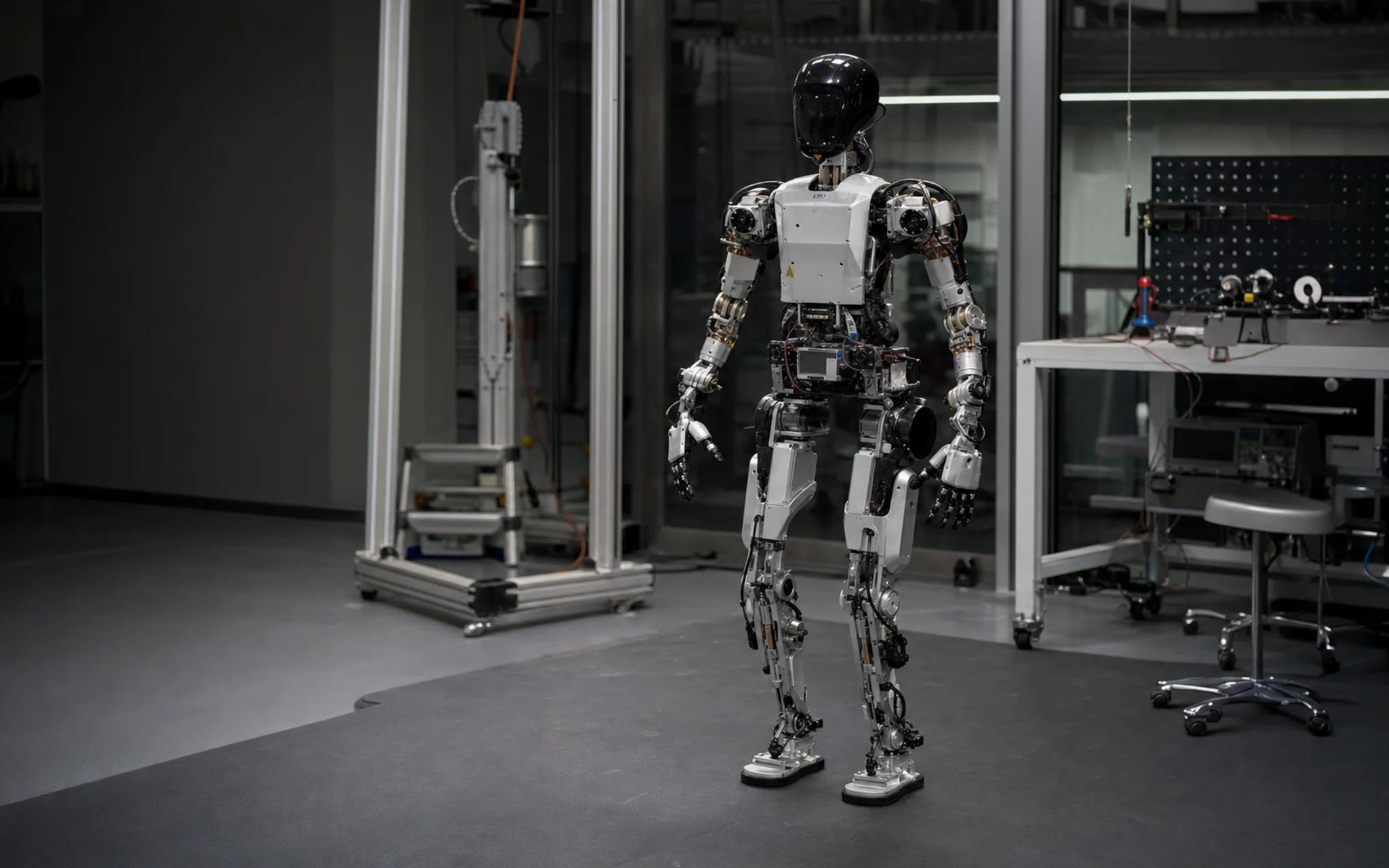
A humanoid robot under force and tactile sensing evaluation in a laboratory
EULER

EULER Robotic Sensing

Full-stack intelligent sensing for robots

Palm, forearm, torso, wrist and foot — close the force and tactile gap in one pass. Two technology lines, multi-axis force and flexible pressure distribution, backed by in-house calibration rigs, system software and developer APIs.

So a robot does not only see, but feels: where contact happened, how hard, and in which direction.

Robot types supported

  • Humanoid Robots
  • Collaborative Robots
  • Industrial Robots
  • Teleoperation Interfaces

01 / APPLICATION SCENARIOS

Four robot types, four deployment paths

The same sensing foundation solves different problems on different robots. Below, mounting locations and matching models per robot type — the markers show where each sensor actually goes.

A humanoid robot standing in a laboratory, annotated with force and tactile sensor mounting locations
Markers indicate sensor mounting locations

01

Humanoid Robots

The difficulty

A humanoid has to walk and manipulate in the real world — it needs both the ground reaction under its feet and awareness of whether its torso or arms have touched a person or object. Vision alone cannot judge contact.

Mounting and model

  1. Chest / torsoHTactile-Skin Motus™Large-area contact sensing — the safety boundary in shared spaces
  2. ForearmHTactile-Skin Motus™Unintended contact with people and surroundings
  3. PalmHTactile-Palm Motus™Contact location and pressure distribution while grasping
  4. Foot12dFA Motus™Ground reaction and centre-of-mass estimation for balance

What you get

Contact sensing across upper and lower body: foot force for balance control, torso and forearm contact for safety stop, palm tactile for grasp judgement.

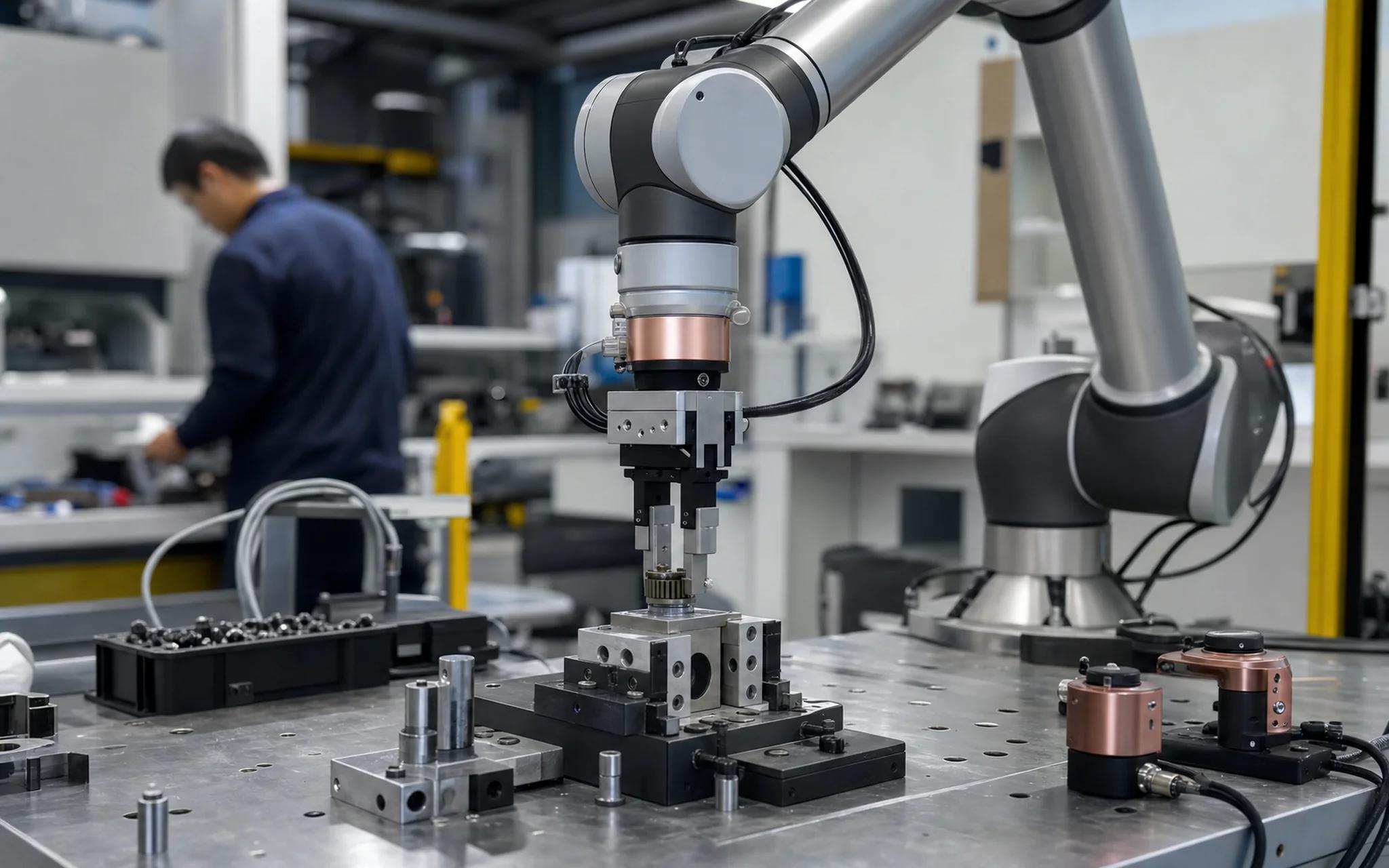
A collaborative robot assembling parts at a workstation, annotated with wrist and gripper sensor mounting locations
Markers indicate sensor mounting locations

02

Collaborative Robots

The difficulty

A cobot shares the workstation with people. It needs enough force precision to complete assembly, yet must yield the instant it touches someone — and a current-based force estimate is not good enough for that threshold.

Mounting and model

  1. Wrist flangeSix-axis force sensorDirect end-effector force and torque, not inferred from motor current
  2. GripperHTactile-Palm Motus™Grip state, slip detection and excessive clamping force

What you get

Six-axis force measured directly at the wrist closes the loop for assembly, polishing and insertion; gripper tactile confirms the workpiece is held, avoiding both crushing and slipping.

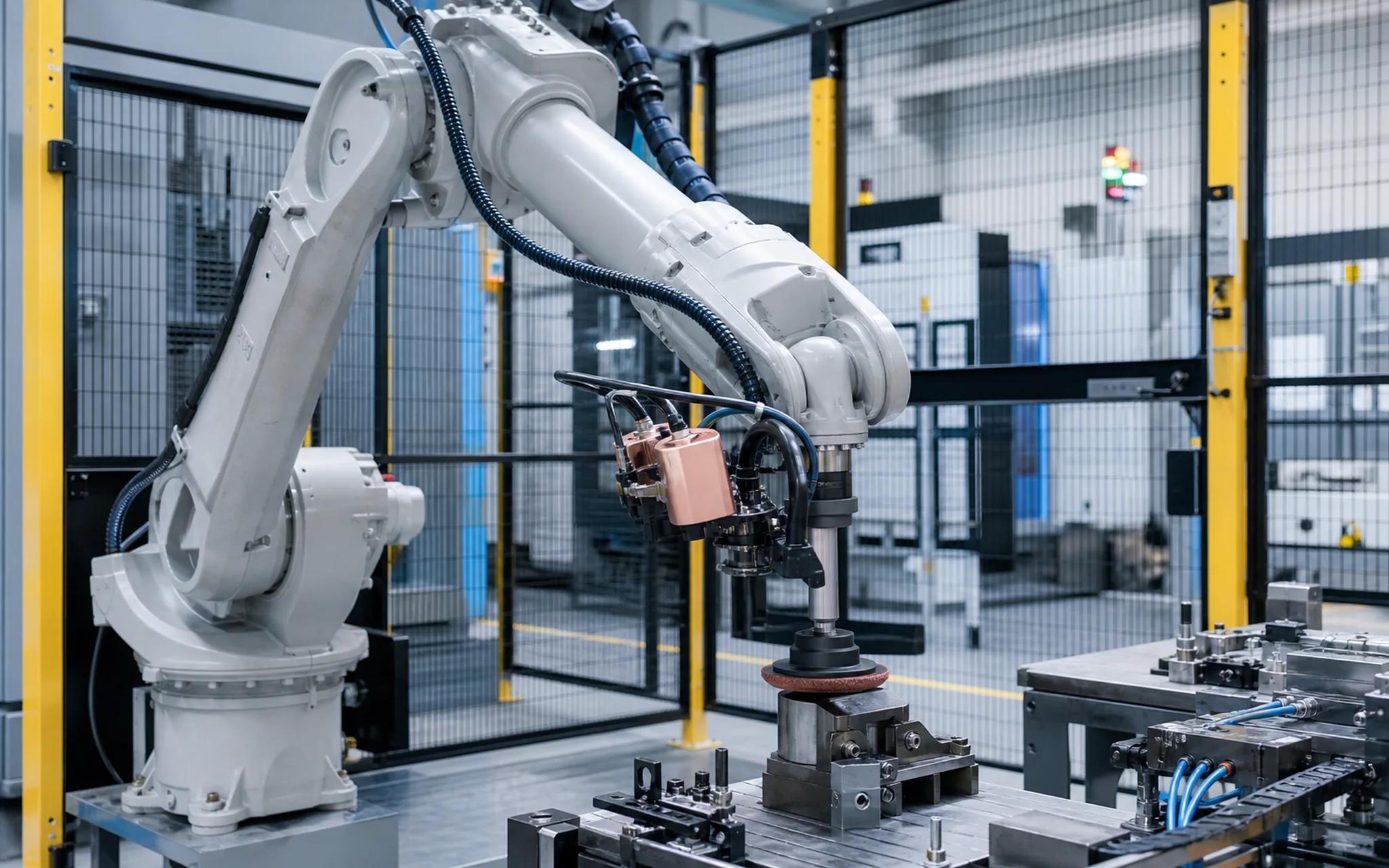
An industrial robot working inside a safety fence, annotated with end-flange and joint sensor mounting locations
Markers indicate sensor mounting locations

03

Industrial Robots

The difficulty

Industrial arms are stiff and fast. Position control cannot deliver the constant force that polishing and assembly need — and once force exceeds the limit, the workpiece and the tool pay for it.

Mounting and model

  1. End flangeSix-axis force sensorForce-control loop for constant-force polishing and compliant assembly
  2. JointJTorq Motus™ joint torqueJoint-level torque feedback for collision detection and load monitoring

What you get

Six-axis force at the end flange turns position control into force control, enabling constant-force polishing and compliant assembly; joint torque covers collision detection and load monitoring.

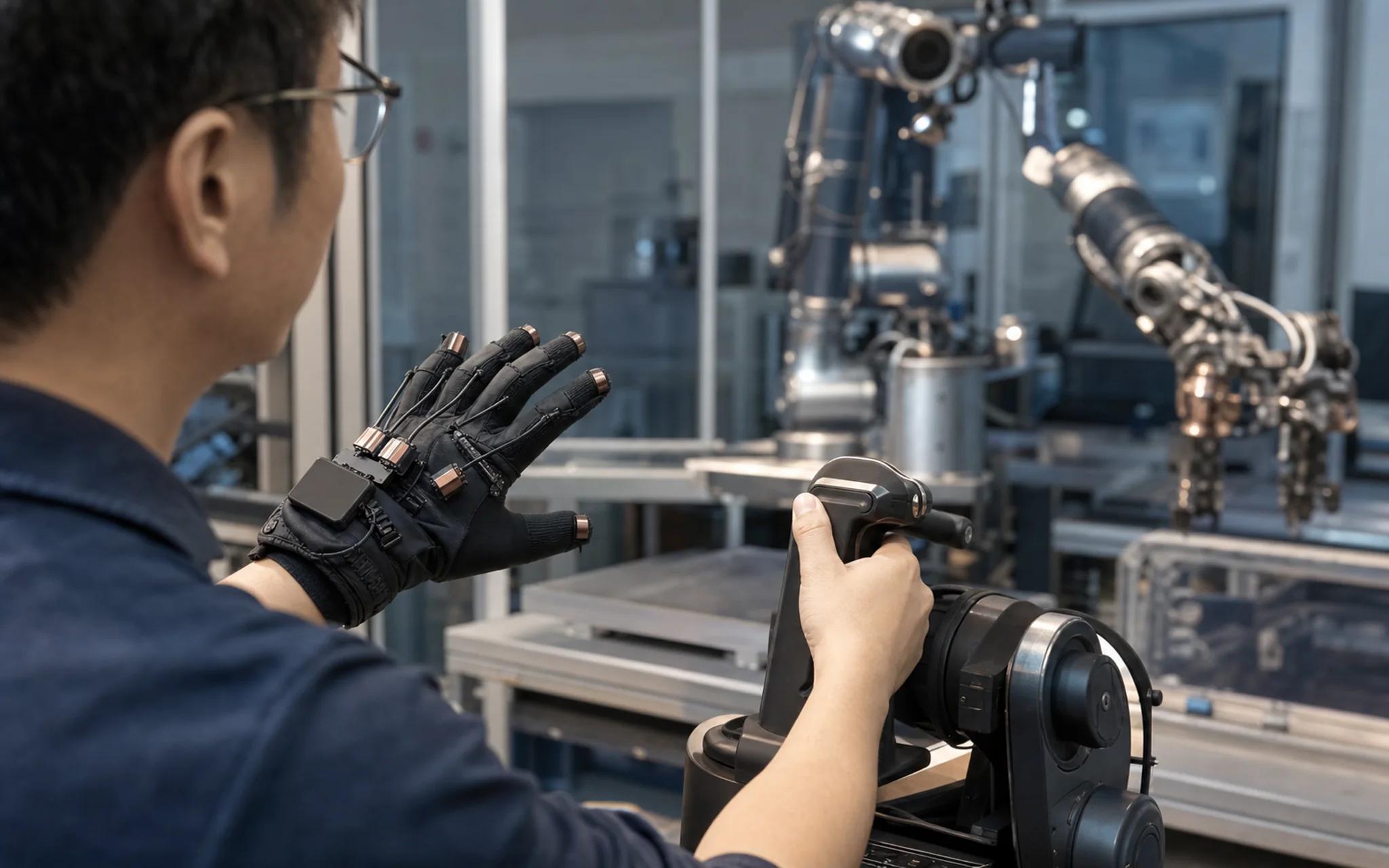
An operator teleoperating a robot arm with a data glove, annotated with fingertip and handle sensor mounting locations
Markers indicate sensor mounting locations

04

Teleoperation Interfaces

The difficulty

The core problem in teleoperation is that the operator feels nothing. They can see the video but cannot sense what the remote end touched or how hard — fine work becomes guesswork.

Mounting and model

  1. Data-glove fingertipsHTactile-Palm Motus™20–32 fingertip sensing points reconstruct the contact distribution
  2. Control handle2dF Motus™ planar forcePlanar force input and magnitude feedback on the handle

What you get

Remote contact and force are returned to the operator: fingertip tactile reconstructs the contact distribution, planar force on the handle supplies direction and magnitude — teleoperation stops being done by eye alone.

02 / INTELLIGENT PLATFORM

Platform software: from testing the sensor to trusting the data

The bundled platform does more than display readings — it first confirms the sensor is healthy and correctly configured, then makes acquisition simple and the data trustworthy.

  1. 01

    Test the sensor

    Power-on self-test and live status: connection, calibration state, firmware version and maximum range on one screen, with fault self-diagnosis and pre-emptive stop surfacing issues before the line halts.

  2. 02

    Effortless acquisition

    Static and dynamic display of Fx/Fy/Fz/Mx/My/Mz plus F2D/F3D/M3D, with plotting, saving, export and online or offline query; guided walkthroughs step through installation and commissioning.

  3. 03

    Accurate, reliable data

    24-bit ADC sampling with built-in decoupling, zeroing and compensation, plus IIR 1000 Hz low-pass and a 50 Hz notch to reject interference; every unit is calibrated on in-house rigs before shipping.

Platform capabilities

  • Three software modules

    Working, tutorial and maintenance modules, covering the full cycle from learning to day-to-day operation.

  • Scenario working profiles

    Custom range, force band, emergency-stop threshold and sampling rate, saved as a standard profile so a new line does not mean new code.

  • API and SDK

    Windows and Linux support, developable in C, C++ and Python, wired straight into force-feedback control and precision measurement.

03 / SPECIFICATIONS

Published specifications, ready for comparison

Two technology lines answer two different questions and share one calibration, software and interface stack. The figures below come from the product technical documentation.

Multi-axis force sensing

Resistive strain-gauge principle with the ADC built into the sensor body, outputting already-decoupled forces and torques — answering how much force, and in which direction.

Flexible pressure-distribution sensing

A flexible array conforms to the robot surface, upgrading "is there contact" into "which points are touched, and how hard" — answering where the contact is.

Six-axis force sensor

Wrist / joint / foot force control

Body materialLy12 aluminium alloy
PrincipleResistive strain gauge
Non-linearity<1% F.S
Repeatability<1% F.S
Hysteresis<1% F.S
Coupling<2% F.S
Channels6
Sampling rate100–2000 Hz
Digital resolution24-bit ADC
FilteringIIR 1000 Hz low-pass + 50 Hz notch
InterfaceEthernet
PowerPoE (IEEE 802.3at Type 1)
Dimensions70 mm × 53.5 mm
Weightapprox. 385 g
Ingress protectionIP67
CableCat-6, 5 m

Four range steps

StepFxFyFzOverload
1125 N125 N250 N12×
2250 N250 N500 N
3500 N500 N1000 N
41000 N1000 N2000 N1.5×

Torque ranges (Mx / My / Mz) per the official technical documentation.

Flexible tactile sensors

Palm / forearm / chest / shank

HTactile-Palm Motus™ hand tactile

Pressure range345 kPa
Sensing points634
Point density9 / cm²
Fingertip sensors20–32
Sampling rate200 Hz
CommunicationUDP
Resolution2.5%
Power8–46 V
AD bits16

HTactile-Skin Motus™ skin tactile

Pressure range345 kPa
Point density1–4 / cm²
Sampling rate200 Hz
CommunicationUDP
Resolution2.5%
Power8–46 V
AD bits16

Official technical documentation prevails.

04 / CALIBRATION & DATA

Calibration rigs and data platforms built in-house

Sensor credibility comes from calibration. Four calibration rigs and three experimental scenario platforms are all in-house, closing production consistency and real-scenario validation inside one system.

Four in-house calibration rigs

Covering factory calibration and re-inspection for both the pressure-distribution and multi-axis force lines.

  • Pressure-distribution calibration rig
  • Intelligent six-axis calibration rig
  • Area gravity calibration rig
  • Six-axis force-table calibration rig

Three experimental scenario platforms

Not hardware alone — reproducible scenario data and multi-dimensional spatial computation ship with it.

  • Gait scenario platform
  • Treadmill scenario platform
  • Robot scenario platform

Integration compatibility

Compatible with major collaborative and industrial robots, offering standard mechanical and data interfaces for fast integration at the end-effector.

  • Universal Robots
  • KUKA
  • FANUC
  • Yaskawa
  • Franka
  • ABB

Brand logos and model-specific adapter lists are being finalized; contact our engineering team about a specific robot model.

05 / APPLICATIONS

Deployed across three kinds of institution

From research validation to clinical assessment to production deployment — one sensing foundation supporting different depths of application.

  • Universities and research institutes

    Research platforms for robot motion control, embodied intelligence and force-tactile work.

  • Medical and rehabilitation institutions

    Mechanical measurement within motor-function assessment and rehabilitation training.

  • Industrial and enterprise customers

    Assembly, polishing and inspection stations that need a closed force-feedback loop.

Tell us your robot model and station scenario

Filter by robot type, mounting location and sensing task, or contact us directly for selection confirmation and sample testing.